
Describe the paddock
Approximate run length, stock type, block location, gateways and whether the existing line is wire, mesh or posts only.
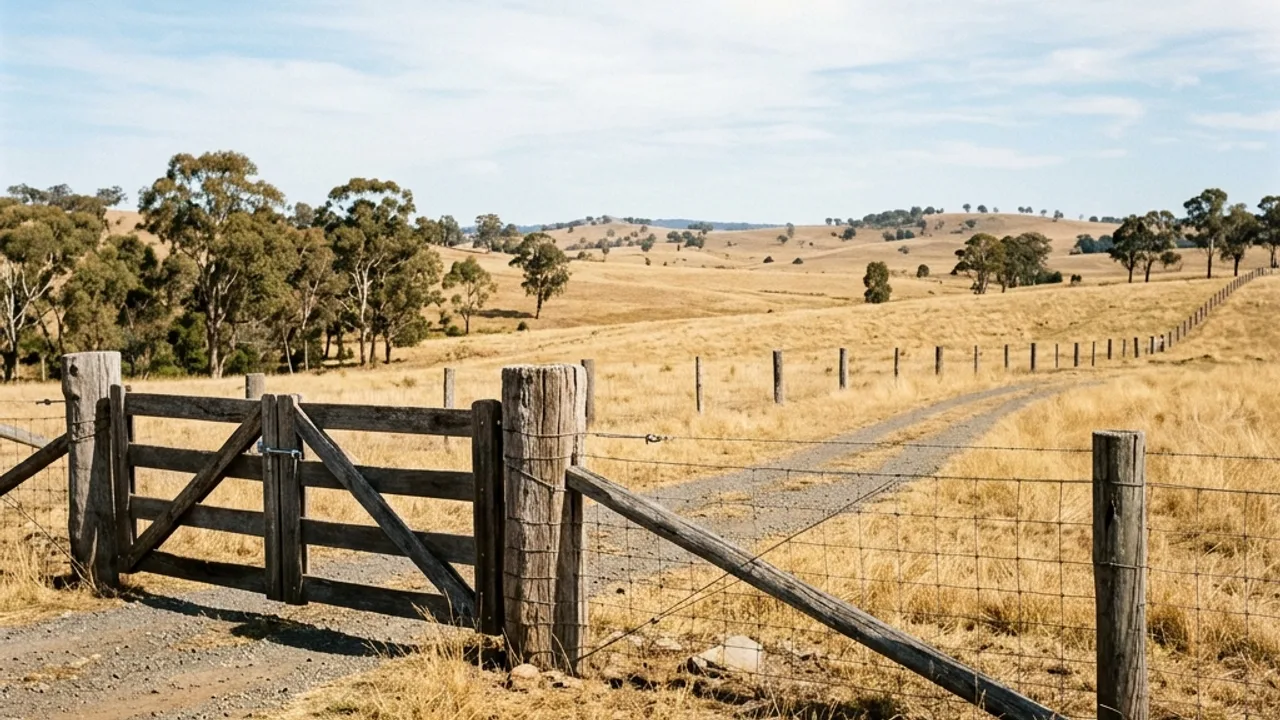
A rural run fails at the ends, not in the middle. We scope the stock, the mesh, the strainers, gateways and the ground before a quote is written.
The usual enquiry comes from a block around Highfields, Cotswold Hills, Westbrook or farther out towards Oakey and Pittsworth, where a sagging wire run no longer holds stock, dogs or a paddock boundary. The useful starting point is not a price per kilometre: it is what the fence must contain, where the gateways sit, how many corners and gullies the run crosses, and whether the ground is reactive black soil or rockier red basalt. Send the approximate length, the stock type and the block location, and the site measure can set the mesh, post spacing and end assemblies around the job rather than around a generic farm fence.
Mesh chosen around the animal being contained, with height, aperture and a plain or barbed top settled before materials are ordered.
A broad farm entrance or driveway feature with timber rails, heavier-duty end posts and room for the machinery that actually uses it.
Offset electric lines where horses or cattle lean on a boundary, or where a separate stand-off is more practical than rebuilding the whole run.
Anchored end assemblies at corners, changes of direction and gateways, because tension is lost at an under-built end long before it is lost in the middle.
Opening widths, vehicle access, gullies and drainage crossings checked so the finished run works for stock movement and farm access.
Cattle, horses, sheep and dogs do not test a fence in the same way. Mesh spacing and height follow the animal, while a horse may need an electric offset to keep it from leaning on the wire. Ringlock and hinge-joint mesh suit different containment decisions, and plain strained wire can be the better answer on a long run where visibility and cost matter more than a mesh face. No honest contractor can promise a stock-proof result without seeing the animal, the terrain and the gate layout.
A kilometre quote depends on clearing, corners, gullies, gateway count, mesh type, post spacing and the number of strainer assemblies. The measure also checks whether machinery can get along the line and whether the ground is the swelling black-soil country west of the range or red, rockier basalt around the higher blocks. Those are method and cost differences, not details to hide inside a per-metre number.
The middle of a properly strained run is rarely the first problem. A strainer post that pulls in, a stay that was never anchored, or a corner that was treated like a straight section lets the tension go and the mesh sags. On the Darling Downs, wet-dry movement in black soil can heave posts over time; on red basalt the ground drains better but digging may be slower and harder. The end assemblies, post spacing and soil response are therefore part of the fence design, not an afterthought.
The licensing position also needs to be stated accurately. A fence with no concrete footing made from posts, pickets or stakes joined by strands of wire is exempt from QBCC licensing at any value, and fencing on agricultural or pastoral land has a separate exemption under $27,500. Work involving concrete footings on non-agricultural land at $3,300 or more is different. The exemption is a legal classification, not a reason to skip a sound specification or a written scope.
Approximate run length, stock type, block location, gateways and whether the existing line is wire, mesh or posts only.
Corners, changes of direction, gullies, washouts, access for machinery and the condition of the existing strainers are checked on site.
Mesh or wire type, post spacing, strainer assemblies, stays, gateway widths and any electric offset are written down before pricing.
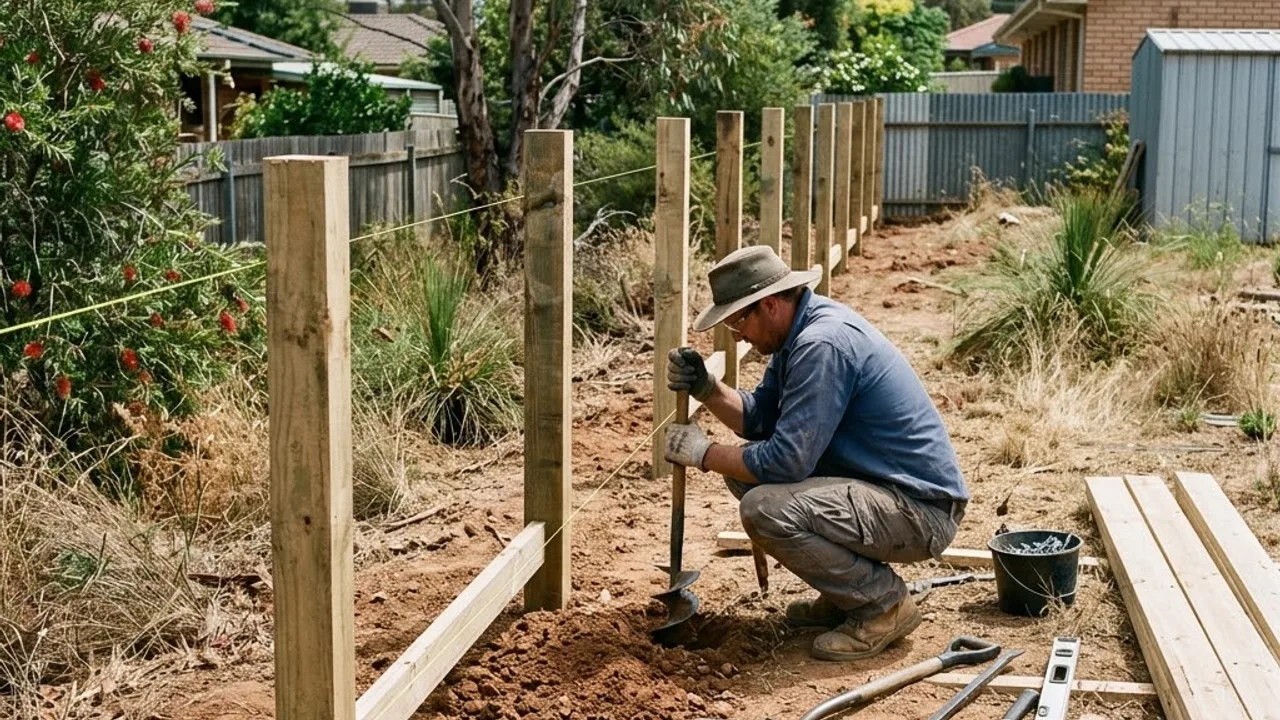
End assemblies go in first, the line is set to the terrain, mesh or wire is tensioned, and gates are hung for the vehicles and stock using them.
Corners, gateways and changes of direction carry the tension, so they are specified as assemblies rather than treated as another ordinary post.
The fence is matched to what is being contained and how it behaves, with an electric offset considered where a physical barrier alone is likely to be leaned on.
Clearing, corners, gateways, gullies, access, mesh type and soil conditions are visible in the scope, so a kilometre figure is not presented as a universal price.
The mesh spacing, height, strainers and gates are selected around the animal and the block. That is a design decision, not a stock-proof guarantee that can be made without a site measure.
There is no honest fixed figure without the terrain, clearing, corners, gateways, mesh, strainers and access. Those variables are measured and itemised before a written quote is put forward.
Some rural wire fences are exempt: wire fencing with no concrete footing is exempt at any value, and agricultural or pastoral land has a separate under-$27,500 exemption. Concrete footings and non-agricultural work can change the position, so the actual scope needs checking.
Look first at the strainers, stays, corner assemblies, post spacing and soil movement. A run can be sound in the middle and still fail when an end post pulls in or seasonal movement heaves the line.
Regulatory information is general guidance only. The licensing position depends on the actual fence, footing, land use and contract scope; confirm the current requirements before work begins.
Questions Toowoomba homeowners bring to this job, answered plainly.
Pick your suburb for the local block, soil and access notes, or send the form and we will come back with a written quote for rural fencing.
Talk to a Toowoomba fencing specialist
Planning a rural fence around Toowoomba?
Send the approximate length, what you need to contain and where the block is. You get a site measure and a written scope built around the ground and the gateways.